
- Rex
- 0 Comments
Introduction
You’ve been dealing with neck pain for months. A friend recommends acupuncture because it helped relieve her chronic headaches. Then your physical therapist mentions dry needling for the tight muscles in your shoulders. You start searching online, only to find articles claiming they’re the same treatment—while others insist they’re completely different.
It’s easy to understand the confusion.
Both treatments use very thin needles. Both are commonly used to help manage musculoskeletal pain. Both may improve movement and reduce discomfort for some patients. At first glance, they can appear nearly identical.
Yet the goals, underlying philosophy, assessment process, treatment techniques, and clinical applications differ in important ways.
Choosing between acupuncture and dry needling isn’t about deciding which one is universally “better.” The better question is which treatment is more appropriate for your diagnosis, symptoms, health history, and rehabilitation goals.
For someone recovering from a sports injury, dry needling may be recommended to address painful trigger points within muscles. Someone experiencing chronic migraines, persistent lower back pain, osteoarthritis, or stress-related muscle tension may benefit from acupuncture as part of a broader treatment plan. In many cases, the two approaches are not competitors at all—they can complement one another when integrated into comprehensive rehabilitation.
At Live Fully Now Rehab & Wellness, patients throughout Hackettstown, NJ, and nearby communities including Long Valley, Chester, Washington, Mansfield, Independence Township, and Mount Olive often ask which option is right for them. The answer begins with understanding how each treatment works, what the evidence suggests, and what you hope to achieve.
This guide explains the similarities and differences between acupuncture and dry needling, how each treatment may help, what current research tells us, and how healthcare professionals determine which approach best fits an individual’s needs.
Treatment Goals
Why Comparing These Treatments Can Be Confusing
The biggest source of confusion is simple: both treatments use thin, sterile needles inserted through the skin.
Because the equipment looks similar, many people assume the treatments are identical.
In reality, using the same tool does not necessarily mean using the same treatment.
Think about a chef and a surgeon.
Both use a knife.
The tool looks similar, but the training, purpose, techniques, and desired outcomes are completely different.
The same principle applies here.
Acupuncture and dry needling share similar needles, but their clinical reasoning and treatment objectives are different.
What Is the Goal of Acupuncture?
Acupuncture has been practiced for thousands of years and has evolved into a treatment used alongside modern healthcare for many musculoskeletal and pain-related conditions.
Today, many rehabilitation professionals view acupuncture through both traditional concepts and modern neuroscience.
Rather than focusing on a single painful muscle, acupuncture often considers how different body systems interact.
Treatment may aim to:
- Reduce pain perception
- Support nervous system regulation
- Decrease muscle tension
- Improve local circulation
- Promote relaxation
- Improve sleep quality
- Support recovery alongside rehabilitation
- Improve overall physical function
Many patients seek acupuncture for conditions such as:
- Chronic neck pain
- Chronic low back pain
- Sciatica
- Osteoarthritis
- Migraine headaches
- Tension headaches
- Shoulder pain
- Tennis elbow
- Knee pain
- Fibromyalgia
Although acupuncture is often associated with pain management, it may also help support recovery by influencing how the nervous system processes pain and how the body responds to ongoing stress.
What Is the Goal of Dry Needling?
Dry needling developed from modern musculoskeletal medicine and is commonly performed by physical therapists and other trained healthcare professionals, depending on state regulations.
The primary focus is different.
Instead of treating broader patterns of pain regulation, dry needling usually targets specific muscles containing myofascial trigger points.
A trigger point is a tight, hypersensitive area within a muscle that may:
- Cause local pain
- Limit movement
- Produce referred pain
- Reduce strength
- Affect normal movement patterns
For example, a trigger point in the shoulder may create pain that travels into the arm or neck.
Dry needling aims to reduce the sensitivity of these trigger points, helping the muscle relax and move more normally.
Because of this, dry needling is frequently incorporated into orthopedic rehabilitation following injuries or surgery.
Understanding Trigger Points
Imagine tying a knot in the middle of a rope.
The knot creates tension throughout the rope, making it less flexible.
Muscles behave similarly.
A trigger point represents a small area where muscle fibers remain contracted instead of relaxing normally.
These areas can become painful when pressed and may even create pain somewhere else in the body.
For example:
- A trigger point in the upper trapezius may contribute to headaches.
- A trigger point in the gluteal muscles may create pain into the hip.
- A trigger point in the calf can affect walking mechanics.
Dry needling attempts to release these dysfunctional muscle areas so movement becomes easier and less painful.
Shared Treatment Goals
Although acupuncture and dry needling approach treatment differently, they share several common objectives.
Both treatments may help:
- Reduce pain
- Improve movement
- Decrease muscle tightness
- Improve participation in rehabilitation
- Support recovery after injury
- Improve quality of life
Neither treatment should be viewed as a cure.
Instead, each serves as one component of a comprehensive rehabilitation strategy that may also include:
- Physical therapy
- Therapeutic exercise
- Manual therapy
- Stretching
- Postural education
- Activity modification
- Home exercise programs
- Lifestyle recommendations
Conditions Commonly Treated
The following table highlights where the two treatments often overlap.
| Condition | Acupuncture | Dry Needling |
|---|---|---|
| Chronic low back pain | Frequently used | Frequently used |
| Neck pain | Frequently used | Frequently used |
| Shoulder pain | Frequently used | Frequently used |
| Muscle trigger points | Sometimes | Primary treatment focus |
| Sciatica | Often included in rehabilitation | May help associated muscle tension |
| Migraine headaches | Common application | Sometimes used for associated neck muscles |
| Osteoarthritis | Common application | Less common |
| Sports injuries | May support recovery | Frequently incorporated |
| Muscle strains | Sometimes | Common |
| Chronic pain syndromes | Frequently used | May be included depending on muscle involvement |
The overlap explains why many patients hear about both treatments during rehabilitation.
The differences become clearer when we look at how each treatment is performed and the scientific principles behind them.
Does Either Treatment Work Immediately?
Some patients report noticeable improvement after their first appointment, while others experience gradual progress over several visits.
This variability is completely normal.
Pain is influenced by many factors, including:
- The duration of symptoms
- Tissue healing
- Nervous system sensitivity
- Sleep quality
- Stress levels
- Overall health
- Physical activity
- Underlying diagnosis
Whether you choose acupuncture or dry needling, realistic expectations are essential.
The goal is not simply temporary pain relief. The larger objective is helping you move more comfortably, participate in rehabilitation, and return to meaningful daily activities.
Key Differences
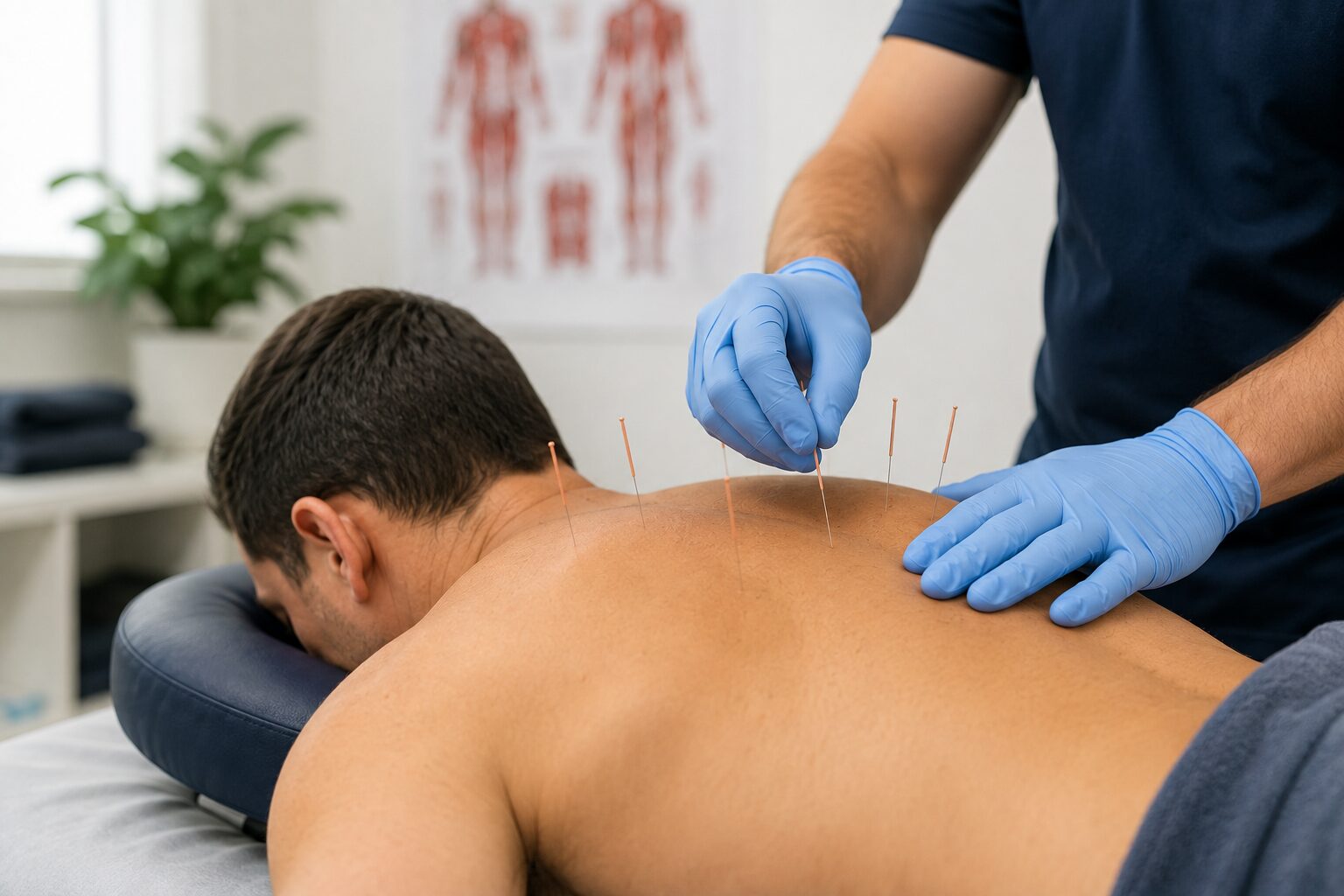
Although acupuncture and dry needling both use thin, sterile needles, the similarities largely end there. Understanding what each treatment is designed to accomplish can help you make an informed decision with your healthcare provider.
Rather than asking, “Which one is better?” it is often more helpful to ask, “Which one is better suited to my condition and rehabilitation goals?”
Comparing Acupuncture and Dry Needling
The following table summarizes the most important differences patients should know.
| Feature | Acupuncture | Dry Needling |
|---|---|---|
| Primary Goal | Support pain modulation, nervous system regulation, and overall function | Treat myofascial trigger points and muscle dysfunction |
| Clinical Focus | Whole-person approach combined with modern pain science | Specific muscles causing pain or movement restriction |
| Typical Providers | Licensed acupuncturists and some healthcare professionals with acupuncture training | Physical therapists and other licensed professionals where permitted by state law |
| Main Conditions | Chronic pain, headaches, arthritis, sciatica, neck pain, back pain, stress-related muscle tension | Muscle strains, trigger points, sports injuries, movement dysfunction |
| Needle Placement | Based on clinical assessment and treatment strategy | Directly into affected muscles and trigger points |
| Often Combined With | Exercise, rehabilitation, manual therapy, lifestyle education | Physical therapy, corrective exercise, stretching, manual therapy |
While the table provides a quick overview, the differences become easier to understand when you look at how each treatment influences the body.
Different Treatment Philosophies
Acupuncture: Looking at the Bigger Picture
Modern acupuncture recognizes that chronic pain rarely comes from one structure alone.
A person with persistent neck pain, for example, may also experience:
- Poor sleep
- Stress
- Muscle guarding
- Reduced neck mobility
- Headaches
- Increased nervous system sensitivity
These factors constantly interact with one another.
Rather than focusing only on the painful muscle, acupuncture often addresses how the nervous system, connective tissues, circulation, and muscles work together.
Current research suggests acupuncture may influence:
- Pain-processing pathways in the brain
- Endorphin release
- Serotonin activity
- Local blood flow
- Muscle tone
- Autonomic nervous system regulation
This broader approach helps explain why some patients report improvements in sleep, relaxation, stress levels, and overall well-being in addition to pain reduction.
Dry Needling: Targeting Dysfunctional Muscles
Dry needling takes a more localized approach.
Its primary focus is identifying muscles that are not functioning normally.
Healthcare providers assess:
- Tight muscle bands
- Trigger points
- Restricted movement
- Weakness
- Pain with muscle contraction
- Referred pain patterns
Once a dysfunctional muscle is identified, the needle is inserted directly into that trigger point.
The objective is to reduce muscle tension, restore normal muscle function, and improve movement.
Understanding Trigger Points
Trigger points are often misunderstood.
They are not simply “knots” that need to be broken apart.
Instead, they are small areas within muscle fibers that remain in a persistent state of contraction.
Imagine holding your fist tightly clenched for several hours.
Eventually the muscles would become sore, stiff, and fatigued.
Trigger points behave similarly, except the contraction occurs in only a small portion of the muscle.
These areas may:
- Become painful when touched
- Restrict joint movement
- Reduce muscle strength
- Alter posture
- Cause referred pain elsewhere
For example:
| Trigger Point Location | Pain May Be Felt In |
|---|---|
| Upper trapezius | Neck, temples, head |
| Gluteus medius | Hip and outer thigh |
| Piriformis | Buttock and leg |
| Calf muscles | Ankle or foot |
| Forearm muscles | Wrist and hand |
Dry needling specifically targets these trigger points.
Acupuncture may also improve muscle tension, but it is not limited to treating trigger points alone.
How Each Treatment Affects the Nervous System
Pain is not created solely by injured tissues.
The brain and spinal cord constantly evaluate incoming information before deciding how much pain you experience.
This is especially important in chronic pain conditions.
Acupuncture and Pain Regulation
Research suggests acupuncture may influence multiple pain-control systems simultaneously.
These include:
- Activation of sensory nerve fibers
- Increased release of endorphins
- Modulation of serotonin and dopamine
- Changes in spinal cord pain processing
- Reduced sensitivity within pain pathways
- Improved balance between the sympathetic (“fight-or-flight”) and parasympathetic (“rest-and-digest”) nervous systems
An analogy many patients find helpful is thinking of pain as a car alarm.
In chronic pain, the alarm sometimes becomes overly sensitive.
A passing truck—or even a strong gust of wind—may trigger it.
Acupuncture may help reduce that excessive sensitivity so the nervous system becomes less reactive to normal daily activities.
Dry Needling and Neuromuscular Function
Dry needling focuses more directly on restoring muscle performance.
Needle insertion into a trigger point may produce a brief involuntary muscle contraction known as a local twitch response.
Although not required for successful treatment, many clinicians believe this response reflects a reduction in abnormal muscle activity.
Potential effects include:
- Reduced muscle tension
- Improved muscle activation
- Better joint movement
- Decreased referred pain
- Improved movement patterns
Because movement quality is central to orthopedic rehabilitation, dry needling is often combined immediately with stretching or strengthening exercises.
Muscles, Fascia, and Connective Tissue
Neither treatment affects muscles alone.
The body functions as an interconnected system.
Fascia Matters More Than Many People Realize
Fascia is a continuous web of connective tissue surrounding muscles, nerves, tendons, ligaments, and organs.
Healthy fascia allows tissues to glide smoothly.
Following injury, prolonged inactivity, repetitive movements, or chronic pain, fascial mobility may become restricted.
Patients frequently describe this as:
- Tightness
- Pulling
- Stiffness
- Reduced flexibility
Research suggests both acupuncture and dry needling mechanically stimulate connective tissue, although their treatment strategies differ.
Scientists continue studying how these mechanical effects influence healing, inflammation, and pain perception.
Inflammation and Healing
One common misconception is that both treatments simply “reduce inflammation.”
The reality is more complex.
Inflammation is a normal part of tissue healing.
After an injury, inflammation helps remove damaged tissue and begin repair.
Problems arise when inflammation persists longer than necessary or when pain continues after tissues have largely healed.
Research suggests acupuncture may influence inflammatory signaling through several biological pathways, while dry needling may create a small, controlled mechanical stimulus that encourages local tissue remodeling.
Neither treatment “cures” inflammation.
Instead, each may support the body’s normal healing response in different ways.
What Does Each Treatment Feel Like?
Patients often ask whether acupuncture and dry needling feel the same.
The answer is: not always.
Acupuncture Sensations
Many patients report:
- Mild tingling
- Warmth
- Gentle pressure
- Dull aching
- Relaxation
Some barely notice the needles after insertion.
Others become so relaxed they fall asleep during treatment.
Dry Needling Sensations
Dry needling is generally more focused on muscle response.
Patients may notice:
- Muscle twitching
- Temporary cramping
- A deeper aching sensation
- Brief soreness afterward
Because trigger points are often already sensitive, inserting a needle directly into one can feel more intense than a typical acupuncture treatment.
Neither experience should involve severe or unbearable pain.
Providers can modify techniques if discomfort becomes excessive.
Safety Considerations
Both treatments are generally considered safe when performed by qualified healthcare professionals using sterile, single-use needles.
Potential mild side effects include:
- Temporary soreness
- Minor bruising
- Small amounts of bleeding
- Fatigue
- Temporary increase in muscle soreness
Before treatment, tell your provider if you:
- Take blood-thinning medication
- Have a bleeding disorder
- Are pregnant
- Have a pacemaker or implanted electrical device
- Have an active skin infection
- Have experienced fainting with needles before
Open communication helps ensure treatment is both appropriate and safe.
Can Acupuncture and Dry Needling Be Used Together?
Yes.
Many rehabilitation clinics integrate both treatments when clinically appropriate.
For example, a patient recovering from chronic neck pain may receive:
- Acupuncture to support pain modulation and nervous system regulation.
- Dry needling to address persistent trigger points limiting neck movement.
- Manual therapy to improve joint mobility.
- Therapeutic exercise to restore strength and endurance.
- Education on posture, workstation ergonomics, and home exercises.
This multidisciplinary approach recognizes that chronic pain rarely has a single contributing factor.
Addressing pain, muscle function, movement quality, and lifestyle habits together often provides a stronger foundation for long-term recovery than relying on one treatment alone.
Which Is Better for You?
One of the most common questions patients ask is:
“If both treatments use needles, which one should I choose?”
The honest answer is that neither acupuncture nor dry needling is universally better. Each has strengths, limitations, and situations where it may be the more appropriate option.
The decision should be based on several factors, including:
- Your diagnosis
- The source of your pain
- How long you’ve had symptoms
- Your medical history
- Your rehabilitation goals
- Other treatments you’re receiving
- Your provider’s clinical assessment
A treatment that works well for one person may not be the best choice for another.
When Acupuncture May Be the Better Choice
Acupuncture may be recommended when pain involves more than a single tight muscle.
For example, patients with chronic pain often experience multiple contributing factors at the same time, including:
- Increased nervous system sensitivity
- Sleep disturbances
- Stress
- Muscle tension
- Reduced activity levels
- Persistent inflammation
- Widespread discomfort
Because acupuncture focuses on both local tissues and broader nervous system regulation, it may be especially helpful for conditions such as:
- Chronic low back pain
- Chronic neck pain
- Sciatica
- Osteoarthritis
- Migraine headaches
- Tension headaches
- Fibromyalgia
- Chronic shoulder pain
- Persistent knee pain
Many patients also appreciate that acupuncture sessions often provide a sense of deep relaxation, which may indirectly support recovery by improving sleep quality and reducing stress-related muscle tension.
When Dry Needling May Be the Better Choice
Dry needling is often selected when the primary problem is a specific muscle or group of muscles that is limiting movement or producing pain.
Examples include:
- Sports injuries
- Muscle strains
- Trigger points
- Rotator cuff dysfunction
- Tennis elbow
- Plantar fasciitis with calf muscle tightness
- Hip pain related to gluteal trigger points
- Persistent muscle tightness following orthopedic surgery
Because dry needling is commonly integrated into physical therapy sessions, it is often followed immediately by stretching, strengthening, balance training, or movement retraining.
This sequence allows patients to take advantage of improved muscle mobility while learning healthier movement patterns.
When to Choose Each
The following table provides general guidance. Individual recommendations should always be based on a professional evaluation.
| Your Situation | Acupuncture | Dry Needling |
|---|---|---|
| Chronic widespread pain | ✓ Often recommended | May have a limited role |
| Muscle trigger points | May help | ✓ Frequently recommended |
| Sports rehabilitation | May complement rehabilitation | ✓ Frequently incorporated |
| Migraine management | ✓ Commonly used | Sometimes used for associated muscle tension |
| Chronic low back pain | ✓ Often appropriate | May be included if trigger points are present |
| Neck pain with muscle tightness | ✓ Often appropriate | ✓ Often appropriate |
| Stress-related muscle tension | ✓ Frequently considered | Less commonly the primary treatment |
| Limited shoulder mobility due to muscle dysfunction | May support recovery | ✓ Often recommended |
Remember that these are not strict rules.
Many patients benefit from both treatments during different stages of recovery.
Can Either Treatment Replace Physical Therapy?
Usually not.
Pain relief is important, but restoring movement is equally important.
If your shoulder hurts less but you still cannot lift it overhead correctly, the underlying movement problem remains.
Similarly, if your lower back pain improves but your core muscles remain weak, symptoms may eventually return.
Physical therapy focuses on restoring:
- Strength
- Mobility
- Flexibility
- Balance
- Coordination
- Functional movement
- Endurance
Acupuncture and dry needling can help create an opportunity for better movement by reducing pain and muscle guarding, but rehabilitation exercises help maintain those improvements over time.
This is why many rehabilitation clinics integrate these treatments rather than viewing them as alternatives.
When Should You Seek Medical Evaluation First?
Not every painful condition is appropriate for acupuncture or dry needling.
Seek prompt medical evaluation if you experience:
- Sudden loss of bowel or bladder control
- Progressive muscle weakness
- Severe numbness
- Fever with significant neck or back pain
- Unexplained weight loss
- Pain after significant trauma
- Persistent night pain that does not improve with rest
- Signs of infection such as redness, swelling, or drainage
- Chest pain, shortness of breath, or symptoms suggesting a medical emergency
These symptoms may indicate conditions requiring immediate medical attention before conservative treatment begins.
Frequently Asked Questions
1. Is dry needling the same as acupuncture?
No.
Although both treatments use thin, sterile needles, they differ in their clinical philosophy, assessment process, and treatment goals.
Acupuncture generally focuses on pain regulation, nervous system function, and overall health, while dry needling primarily targets dysfunctional muscles and trigger points.
2. Which treatment hurts more?
Most patients report that acupuncture causes minimal discomfort.
Dry needling may feel more intense because the needle is inserted directly into tight muscles or trigger points.
A brief muscle twitch or cramping sensation is common during dry needling.
Neither treatment should involve severe pain.
3. Which works better for chronic back pain?
There is no single answer.
For chronic low back pain involving nervous system sensitization, muscle tension, and long-standing symptoms, acupuncture may be an excellent option.
If trigger points within specific muscles are limiting movement, dry needling may also be beneficial.
Many patients benefit from combining either treatment with physical therapy and exercise.
4. Which treatment is supported by research?
Both acupuncture and dry needling have growing bodies of scientific research.
Acupuncture has been studied more extensively, particularly for chronic pain conditions, migraines, osteoarthritis, and low back pain.
Research supporting dry needling continues to expand, especially for trigger points and musculoskeletal rehabilitation.
As with any treatment, results vary, and research continues to evolve.
5. How many sessions will I need?
There is no universal treatment schedule.
The number of visits depends on:
- Your diagnosis
- Symptom severity
- Duration of symptoms
- Overall health
- Response to treatment
- Participation in rehabilitation
Some patients notice improvements after a few sessions, while others require a longer course of care.
Your provider should reassess progress regularly and adjust the treatment plan based on your response.
6. Can I receive acupuncture and dry needling during the same rehabilitation program?
Yes.
When clinically appropriate, some rehabilitation providers combine both treatments.
For example, acupuncture may help regulate pain and reduce overall nervous system sensitivity, while dry needling addresses specific muscles contributing to movement limitations.
The decision depends on your condition and the provider’s clinical assessment.
7. Are there side effects?
Most side effects are mild and temporary.
These may include:
- Minor soreness
- Bruising
- Temporary fatigue
- Small amounts of bleeding at the needle site
- Muscle soreness after dry needling
Serious complications are uncommon when treatment is performed by qualified healthcare professionals using sterile techniques.
8. Who should avoid these treatments?
Treatment may need to be postponed or modified for individuals who:
- Have active skin infections
- Have uncontrolled bleeding disorders
- Take certain blood-thinning medications
- Have specific implanted electrical devices (for electrical stimulation techniques)
- Are experiencing certain medical emergencies
Always discuss your complete medical history before treatment begins.
9. Can these treatments help prevent future pain?
Neither acupuncture nor dry needling can guarantee that pain will not return.
Long-term improvement usually depends on addressing contributing factors such as:
- Strength deficits
- Flexibility limitations
- Poor posture
- Repetitive movement habits
- Workstation ergonomics
- Physical activity levels
- Stress management
A comprehensive rehabilitation program helps reduce the likelihood of recurrence.
10. Can older adults receive acupuncture or dry needling?
Many older adults safely receive these treatments.
Age alone is not a reason to avoid either approach.
Your provider will consider factors such as medications, osteoporosis, circulation, skin integrity, and other health conditions before recommending treatment.
11. Does insurance cover acupuncture or dry needling?
Coverage varies depending on your insurance plan, diagnosis, and provider network.
Some insurance plans cover acupuncture for specific pain conditions.
Dry needling coverage also varies and may be included under certain physical therapy benefits.
It is always best to verify coverage directly with your insurance provider or the clinic before beginning treatment.
12. How do I know which treatment is right for me?
The best choice begins with a comprehensive evaluation.
A qualified healthcare professional can determine:
- Whether your pain is primarily muscular, joint-related, nerve-related, or multifactorial.
- Whether trigger points are contributing to your symptoms.
- Whether acupuncture, dry needling, physical therapy, or a combination of treatments is most appropriate.
The goal is to match the treatment to the underlying problem rather than selecting a treatment based on popularity or online reviews.