
Introduction
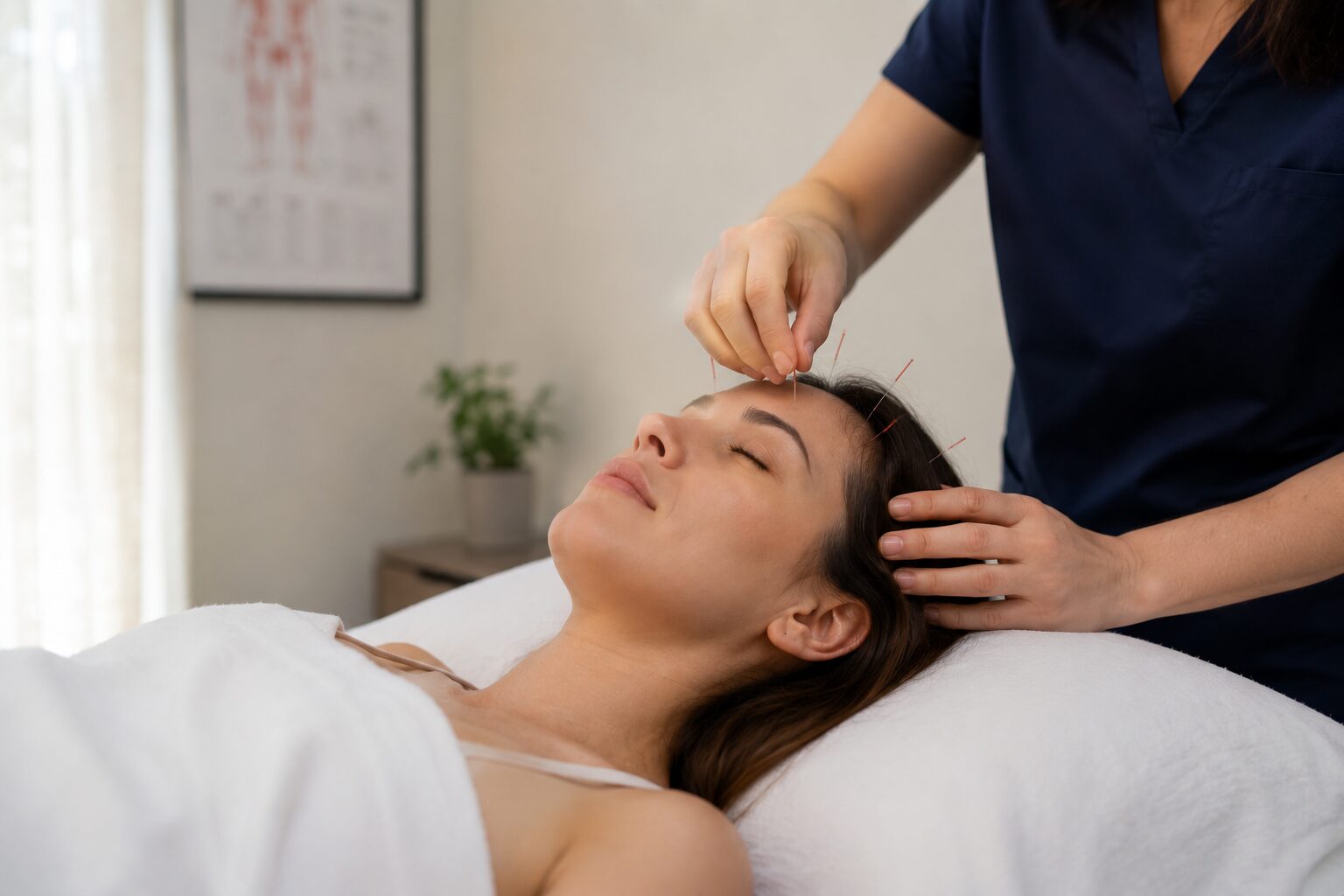
You wake up feeling fine, make your coffee, and start your morning routine. Then it begins a dull ache behind one eye. Within an hour, the pain intensifies. Bright lights suddenly feel unbearable. Every sound seems louder than normal. Nausea creeps in, and the plans you made for the day quickly disappear.
If you’ve experienced migraines, you know they are much more than “just a headache.”
For many people, migraines interrupt work, family time, exercise, and sleep. Some begin worrying about when the next attack will happen instead of enjoying the days between them. Others carry medication everywhere they go because they never know when symptoms might appear.
While medications play an important role for many individuals, they are not the only treatment option. Some people cannot tolerate medication side effects. Others continue having migraines despite taking preventive treatments. This has led many patients to explore complementary approaches such as acupuncture.
Acupuncture has become an increasingly recognized option within integrative healthcare for migraine management. Research suggests it may help reduce the frequency and intensity of migraines for some people, particularly when combined with lifestyle modifications, rehabilitation strategies, and appropriate medical care.
At Live Fully Now Rehab & Wellness, patients from Hackettstown, NJ, as well as nearby communities including Long Valley, Chester, Washington, Mansfield, Independence Township, and Mount Olive often ask whether acupuncture could become part of a personalized migraine management plan. The answer depends on the type of migraine, overall health, symptom pattern, and individual treatment goals.
This guide explains what triggers migraines, how acupuncture may help, what current research shows, what to expect during treatment, and when migraines require prompt medical evaluation.
Migraine Triggers
Understanding What a Migraine Really Is
A migraine is a complex neurological condition involving changes in brain activity, the nervous system, blood vessels, and pain-processing pathways.
Although headaches are the best-known symptom, migraines often involve much more than head pain.
Many people experience:
- Throbbing or pulsating pain
- Pain on one or both sides of the head
- Nausea or vomiting
- Sensitivity to light
- Sensitivity to sound
- Sensitivity to certain smells
- Dizziness
- Difficulty concentrating
- Fatigue
- Neck stiffness
- Visual disturbances known as aura
Some attacks last only a few hours, while others continue for several days.
Migraines affect each person differently, making individualized treatment especially important.
Common Migraine Triggers
Migraines usually occur because multiple factors interact rather than a single cause.
Common triggers include:
| Trigger | Why It May Contribute |
|---|---|
| Stress | Alters nervous system activity and muscle tension |
| Poor sleep | Disrupts normal brain regulation |
| Hormonal changes | Influences neurological sensitivity |
| Dehydration | May affect circulation and brain function |
| Skipping meals | Blood sugar fluctuations can trigger attacks |
| Bright lights | Overstimulates sensitive brain pathways |
| Strong odors | May activate pain-processing centers |
| Weather changes | Barometric pressure shifts affect some individuals |
| Certain foods | Individual sensitivities vary greatly |
Learning personal triggers often becomes one of the most effective long-term management strategies.
Keeping a migraine diary can help identify patterns that might otherwise go unnoticed.
The Role of the Nervous System
Researchers now understand that migraines involve an overly sensitive nervous system.
Think of the brain as having a volume control for pain.
In people with migraines, that volume knob may already be turned up higher than normal.
Small changes that other people barely notice such as missing lunch, sleeping poorly, or encountering bright sunlight may be enough to activate migraine pathways.
Once those pathways become activated, inflammation around pain-sensitive structures and altered communication between nerves contribute to the symptoms many patients recognize.
This understanding helps explain why migraine management often involves more than simply treating pain after it starts.
Why Neck and Shoulder Muscles Matter
Many migraine sufferers notice stiffness in the neck and shoulders before or during an attack.
This doesn’t necessarily mean tight muscles cause migraines.
Instead, the muscles, connective tissue, and nervous system constantly communicate with one another.
Persistent muscle tension may increase sensitivity in nearby nerves and contribute to discomfort during an attack.
Improving mobility, reducing muscular tension, and restoring normal movement patterns may therefore support overall migraine management.
Patients are often surprised to learn that rehabilitation professionals frequently evaluate posture, neck mobility, jaw function, and upper back movement when treating recurring headaches.
These factors may not be the primary cause of migraines, but they can influence symptom intensity in some individuals.
How Acupuncture May Help
What Is Acupuncture?
Acupuncture involves inserting extremely fine, sterile needles into carefully selected points on the body.
While rooted in Traditional Chinese Medicine, modern acupuncture is also studied through the lens of neuroscience, anatomy, and pain physiology.
Researchers believe acupuncture influences several biological systems involved in migraine pain, including the nervous system, connective tissue, circulation, and natural pain-regulating mechanisms.
Rather than replacing conventional medical care, acupuncture is often used alongside other evidence-based treatments as part of a comprehensive care plan.
How Acupuncture May Influence Migraine Symptoms
Modulating Pain Processing
One of the most studied effects of acupuncture is its influence on the central nervous system.
Needle stimulation activates sensory nerves that communicate with the spinal cord and brain.
This may encourage the release of natural chemicals such as endorphins and serotonin, which play important roles in pain regulation.
For some patients, this may reduce how intensely the brain processes migraine pain.
Supporting Nervous System Regulation
Migraines are associated with changes in how the autonomic nervous system functions.
This system helps regulate heart rate, breathing, digestion, stress responses, and other automatic body functions.
Acupuncture may encourage a shift away from an overactive “fight-or-flight” response toward a more balanced state that supports relaxation and recovery.
Many patients report feeling calmer and sleeping better after treatment both of which may contribute to improved migraine management.
Improving Blood Flow
Researchers have also investigated how acupuncture affects circulation.
Needle stimulation appears to increase local blood flow in treated areas and may influence circulation within tissues involved in pain processing. Better circulation can help deliver oxygen and nutrients while assisting the body’s natural healing processes.
Although migraines originate within the nervous system rather than simply from poor circulation, healthy blood flow supports normal tissue function and may contribute to symptom improvement in some individuals.
Reducing Muscle Tension
Many people with migraines develop persistent tightness in the:
- Neck
- Upper shoulders
- Base of the skull
- Jaw muscles
- Upper back
Sometimes this muscle tension develops before the migraine begins. In other cases, it occurs because people naturally tighten their muscles while experiencing pain.
Acupuncture may help reduce excessive muscle guarding by influencing muscle tone and local nerve activity. Patients often report that their neck feels looser and head movement becomes easier after treatment.
Reducing muscular tension does not eliminate migraines by itself, but it may decrease one source of discomfort that contributes to an overall pain episode.
Influencing Connective Tissue and Fascia
Fascia is a network of connective tissue that surrounds muscles, nerves, blood vessels, and organs throughout the body.
Healthy fascia allows tissues to glide smoothly during movement.
When muscles remain tight for prolonged periods, surrounding connective tissue may also become restricted.
Research suggests acupuncture creates gentle mechanical stimulation within connective tissue, influencing cellular communication and tissue mobility. Scientists continue studying exactly how these changes contribute to pain relief, but this represents another possible mechanism through which acupuncture supports rehabilitation.
Supporting the Brain’s Natural Pain-Control Systems
The body has its own built-in pain management system.
Under normal circumstances, the brain continuously decides which sensations deserve attention and which should be filtered out.
During migraines, this filtering system becomes less efficient.
Acupuncture appears to influence several brain regions involved in pain perception, emotional processing, and sensory regulation. Rather than simply masking pain, it may help normalize how the brain responds to incoming pain signals.
This is one reason some patients describe improvements that extend beyond headache intensity, including:
- Better sleep
- Reduced stress
- Improved concentration
- Less neck stiffness
- Increased energy between migraine attacks
Research Overview
Does the Research Support Acupuncture for Migraines?
Acupuncture is one of the most extensively studied complementary therapies for migraine prevention.
Multiple clinical trials and systematic reviews suggest that acupuncture may reduce:
- Migraine frequency
- Headache intensity
- Number of headache days each month
- Reliance on certain pain medications for some patients
- Migraine-related disability
Several professional healthcare organizations now recognize acupuncture as a reasonable option for migraine prevention, particularly for individuals seeking non-drug therapies or those who cannot tolerate medication side effects.
Research continues to evolve, and not every study reports identical results. Differences in treatment techniques, the number of sessions, patient characteristics, and migraine type all influence outcomes.
The most consistent finding is that acupuncture appears to offer meaningful benefit for many but not all patients.
What Makes Migraine Research Challenging?
Migraines are highly individual.
Two people with the same diagnosis may have:
- Different triggers
- Different symptoms
- Different attack frequency
- Different pain intensity
- Different responses to treatment
Because of this variability, researchers study large groups of patients rather than relying on individual experiences alone.
This is why healthcare providers avoid guaranteeing results.
Instead, they focus on determining whether acupuncture is appropriate for your specific history, symptoms, and treatment goals.
Acupuncture Compared with Other Conservative Treatments
Migraines often require more than one treatment strategy.
The following comparison illustrates how different conservative approaches contribute to care.
| Treatment | Primary Purpose | Advantages | Limitations |
|---|---|---|---|
| Acupuncture | Support nervous system regulation and reduce migraine frequency | Drug-free, generally well tolerated | Usually requires multiple sessions |
| Preventive Medication | Reduce migraine occurrence | Strong evidence for many patients | Possible side effects |
| Physical Therapy | Improve neck mobility, posture, muscle function | Helpful when neck dysfunction contributes | Does not directly treat neurological migraine mechanisms |
| Stress Management | Reduce trigger burden | Supports long-term control | Requires consistent practice |
| Lifestyle Modification | Improve sleep, hydration, nutrition, exercise | Addresses common triggers | Benefits develop gradually |
Rather than replacing one another, these approaches often work best together.
For example, acupuncture may help reduce headache frequency while physical therapy improves neck mobility and posture. Lifestyle changes can further decrease exposure to known triggers.
This comprehensive approach often provides greater long-term benefit than relying on a single intervention.
Can Acupuncture Replace Medication?
Not necessarily.
Some patients continue taking preventive medications while receiving acupuncture.
Others work with their physician to determine whether medication adjustments are appropriate over time.
Medication decisions should always be made with the healthcare professional managing your migraine care.
Acupuncture should never be viewed as a reason to stop prescribed medication without medical guidance.
Can Acupuncture Replace Physical Therapy?
Usually not.
Although migraines primarily involve the nervous system, many patients also have movement-related issues that contribute to discomfort.
Examples include:
- Limited neck mobility
- Poor posture
- Jaw dysfunction
- Weak deep neck muscles
- Reduced upper back mobility
Physical therapy addresses these movement impairments through individualized exercises and manual techniques.
Acupuncture may help reduce pain enough to make those exercises easier to perform.
Together, the treatments can complement one another rather than compete.
What to Expect
Your Initial Evaluation
Your first appointment begins long before any needles are placed.
A healthcare provider will ask detailed questions about:
- How often migraines occur
- How long attacks last
- Where pain is located
- Associated symptoms
- Previous treatments
- Current medications
- Family history
- Lifestyle factors
- Sleep quality
- Stress levels
A physical examination may also assess:
- Neck mobility
- Shoulder movement
- Jaw mechanics
- Posture
- Muscle tension
- Neurological function
- Balance if appropriate
This evaluation helps determine whether acupuncture is suitable and whether additional medical assessment is needed.
What Does Acupuncture Feel Like?
This is often the first question patients ask.
Most people are surprised by how small acupuncture needles actually are.
Unlike injection needles, acupuncture needles are extremely fine.
You may feel:
- A tiny pinch
- Mild pressure
- Warmth
- Tingling
- A dull ache
- A sensation of heaviness around the needle
Many needles are barely noticeable after placement.
Some patients become deeply relaxed during treatment and even fall asleep.
If any needle causes significant discomfort, it can usually be adjusted immediately.
How Long Is a Session?
Appointments generally last between 30 and 60 minutes.
Needles typically remain in place for approximately 20 to 30 minutes while you rest comfortably.
Some rehabilitation clinics combine acupuncture with:
- Manual therapy
- Stretching
- Therapeutic exercise
- Breathing techniques
- Relaxation training
- Postural education
This integrated approach addresses multiple contributors to migraine symptoms.
Is Acupuncture Safe?
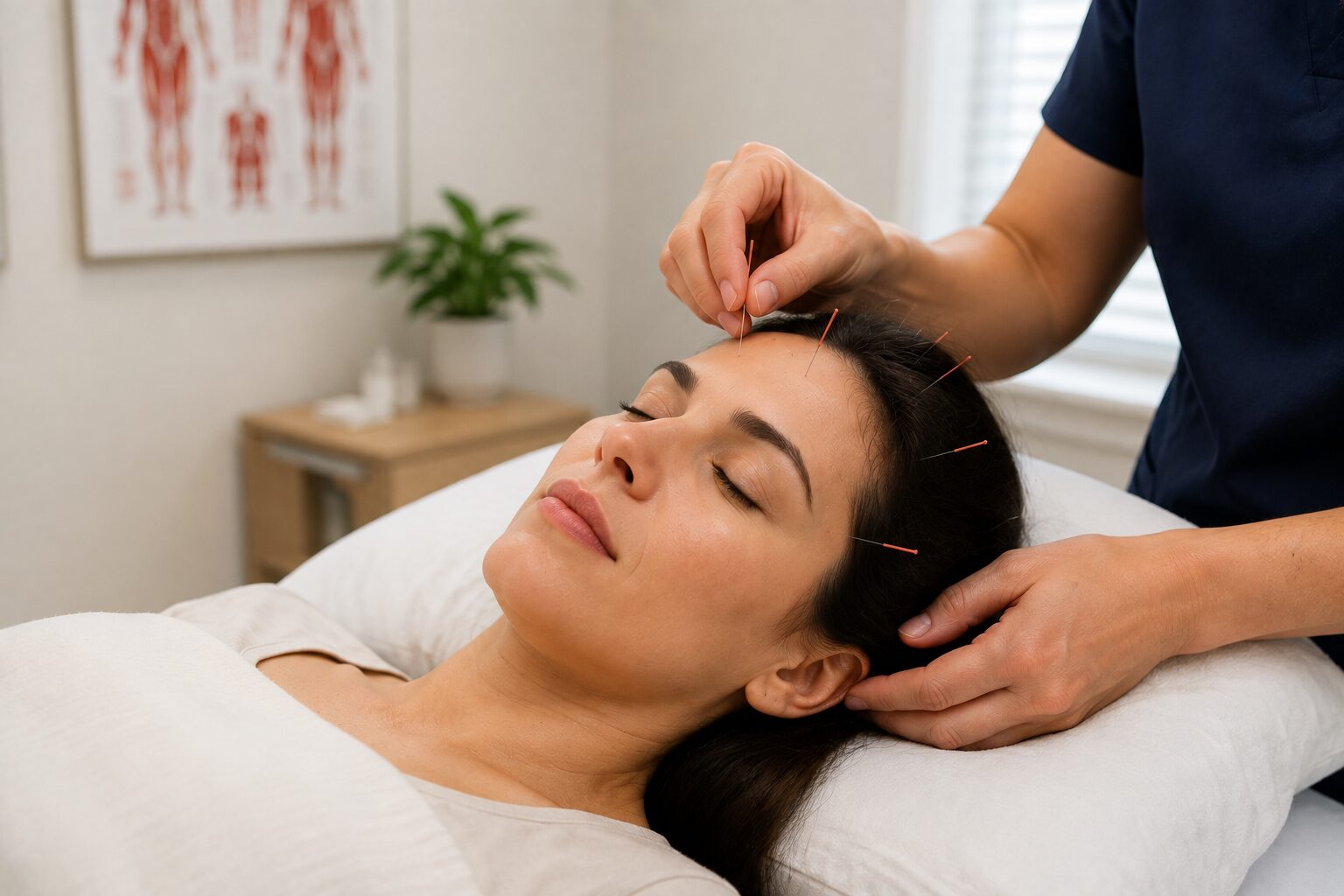
When performed by a licensed healthcare professional using sterile, single-use needles, acupuncture is generally considered very safe.
Minor side effects may include:
- Temporary soreness
- Mild bruising
- Small drops of bleeding
- Temporary fatigue
Serious complications are uncommon when appropriate safety standards are followed.
Be sure to inform your provider if you:
- Are pregnant
- Have a bleeding disorder
- Take blood-thinning medications
- Have implanted electrical medical devices
- Have active skin infections near treatment areas
Your provider can modify treatment when appropriate to maximize safety.
Who May Benefit Most?
Acupuncture may be appropriate for individuals who:
- Experience recurring migraines
- Prefer non-drug treatment options
- Continue having migraines despite medication
- Want to complement existing medical care
- Have neck muscle tension associated with headaches
- Are looking to reduce migraine-related disability
Each treatment plan should be individualized based on the patient’s symptoms, medical history, and goals.
When Should You Seek Immediate Medical Care?
Not every severe headache is a migraine.
Seek immediate medical attention if you experience:
- A sudden “worst headache of your life”
- Headache following significant head trauma
- New weakness, numbness, or difficulty speaking
- Vision loss that does not improve
- Confusion or loss of consciousness
- Fever with severe headache and neck stiffness
- Seizures
- Persistent vomiting with worsening neurological symptoms
- A sudden new headache after age 50
- A major change in your usual migraine pattern
These symptoms may indicate a condition requiring urgent medical evaluation and should not be managed with acupuncture alone.
Frequently Asked Questions
1. Does acupuncture actually work for migraines?
Research suggests that acupuncture may help reduce the frequency, duration, and intensity of migraines for some individuals. It does not work the same way for everyone, and results vary depending on factors such as migraine type, duration of symptoms, overall health, lifestyle habits, and adherence to a comprehensive treatment plan.
For many patients, success is measured by more than pain reduction. They may experience fewer migraine days each month, improved ability to work, better sleep, and less disruption to family and social activities.
Acupuncture should be viewed as one evidence-informed treatment option rather than a guaranteed solution.
2. How many acupuncture sessions are usually needed for migraines?
The number of treatments varies from person to person.
Patients with occasional migraines may notice improvement after several sessions, while those with chronic migraines often benefit from a structured treatment plan over several weeks before reassessing progress.
A typical schedule may look like this:
| Treatment Stage | What to Expect |
|---|---|
| Initial Visit | Comprehensive evaluation, treatment, discussion of migraine history and goals |
| Weeks 1–3 | One to two sessions per week depending on symptom severity |
| Weeks 4–8 | Progress is reassessed based on migraine frequency, intensity, and functional improvement |
| Maintenance | Some patients benefit from occasional follow-up visits if migraines recur |
The treatment plan should always be individualized rather than based on a fixed number of appointments.
3. Does acupuncture hurt?
Most patients are pleasantly surprised by how comfortable acupuncture feels.
The needles are much thinner than those used for vaccinations or blood tests. You may notice:
- A brief pinch
- Mild tingling
- Warmth
- Pressure
- A dull, heavy sensation
Many people describe the treatment as relaxing and even fall asleep during the session.
If a needle causes discomfort, your provider can usually reposition it immediately.
4. How long do the benefits of acupuncture last?
Some people notice improvement for several days after treatment, while others experience gradual changes over the course of multiple sessions.
As migraine frequency decreases, the time between treatments may also increase.
Long-term results often depend on addressing contributing factors such as:
- Sleep quality
- Stress management
- Exercise habits
- Hydration
- Nutrition
- Neck mobility
- Posture
- Trigger avoidance
Acupuncture is most effective when it supports these broader lifestyle and rehabilitation strategies.
5. Can acupuncture prevent migraines?
Acupuncture cannot guarantee that migraines will never occur.
However, research suggests it may reduce the number of migraine attacks for some individuals when used as part of a preventive treatment plan.
Reducing attack frequency can make a meaningful difference in quality of life by allowing patients to spend more time participating in work, exercise, family activities, and hobbies.
6. Is acupuncture safe during pregnancy?
Some pregnant individuals receive acupuncture to help manage headaches or other pregnancy-related symptoms.
However, pregnancy requires special considerations because certain acupuncture points are generally avoided.
Always inform your healthcare provider if you are pregnant or planning to become pregnant so treatment can be modified appropriately.
Migraine management during pregnancy should involve coordination between your obstetric provider and other healthcare professionals.
7. Can children or teenagers receive acupuncture for migraines?
Some adolescents with migraines may be candidates for acupuncture under the care of qualified healthcare professionals experienced in treating younger patients.
Treatment recommendations depend on age, medical history, comfort level, and the nature of the headaches.
Parents should discuss all available treatment options with the child’s healthcare provider before beginning care.
8. Can acupuncture replace migraine medication?
Not necessarily.
Many patients continue taking preventive or rescue medications while receiving acupuncture.
Others may work with their neurologist or primary care physician to determine whether medication adjustments are appropriate over time.
Medication decisions should always be made under medical supervision.
Never stop prescribed migraine medications without consulting the healthcare provider managing your care.
9. Can acupuncture be combined with physical therapy?
Yes.
Many patients benefit from combining acupuncture with rehabilitation when neck pain, muscle tension, posture, or movement dysfunction contributes to their headaches.
A comprehensive rehabilitation program may include:
- Acupuncture
- Physical therapy
- Manual therapy
- Therapeutic exercise
- Postural retraining
- Ergonomic education
- Stress-management strategies
- Home exercise instruction
These treatments address different aspects of migraine management and often complement one another.
10. Who should avoid acupuncture?
Acupuncture may not be appropriate or may require modifications for individuals with:
- Active skin infections near treatment sites
- Certain bleeding disorders
- Uncontrolled medical conditions
- Severe needle phobia that prevents treatment
- Specific implanted medical devices when electrical stimulation is planned
Your healthcare provider will review your medical history to determine whether acupuncture is appropriate and safe for your individual circumstances.
11. What lifestyle changes may help reduce migraines?
Although no single lifestyle change prevents every migraine, many patients benefit from developing consistent daily habits.
Helpful strategies include:
- Maintaining a regular sleep schedule
- Staying well hydrated
- Eating meals consistently
- Managing stress
- Exercising regularly as tolerated
- Limiting excessive caffeine
- Identifying personal migraine triggers
- Practicing good workstation ergonomics
- Taking regular breaks from prolonged computer use
Small improvements practiced consistently often provide greater long-term benefit than dramatic short-term changes.
12. When should I seek medical evaluation before trying acupuncture?
Some headaches require immediate medical attention rather than conservative treatment.
Seek prompt medical evaluation if you experience:
- A sudden, explosive headache unlike any you’ve had before
- Headache with fever, confusion, or neck stiffness
- New neurological symptoms such as weakness, difficulty speaking, or persistent vision loss
- A headache following significant head trauma
- A dramatic change in your usual migraine pattern
- New headaches beginning after age 50
- Persistent headaches that continue worsening despite treatment
These symptoms may indicate a condition requiring urgent medical assessment.
