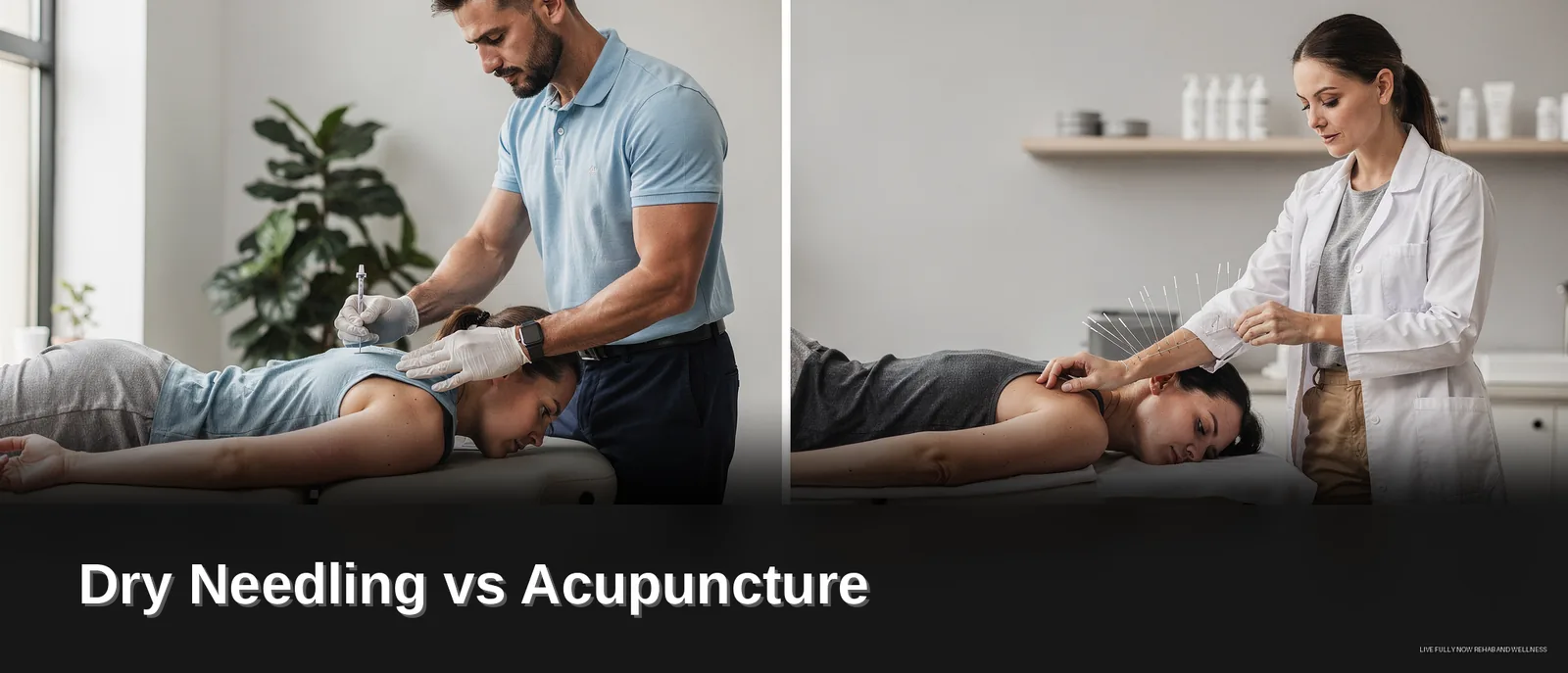
Dry needling targets trigger points in muscles to release tension. Reduce pain, guided by physical therapy training and modern anatomy principles. Acupuncture follows Traditional Chinese Medicine, placing needles along meridians to balance energy flow. Live Fully Now Rehab And Wellness integrates acupuncture into personalized plans addressing chronic pain, stress, and mobility limits.
What Actually Sets Dry Needling Apart from Acupuncture?
Dry needling and acupuncture share one tool: thin, stainless-steel, filiform needles. The similarities end there. Acupuncture follows ancient energy pathways, while dry needling targets specific muscular problems. This distinction changes everything for someone seeking pain relief.
Is Dry Needling the Same as Acupuncture?
No. Acupuncture stems from traditional Chinese medicine, using needles to follow “energy fields or channels” across the body. Dry needling operates on a completely different principle. The needle placement is site-specific, guided by what a therapist feels beneath the skin. A taut band or trigger point causing pain.
Why Does the Training Difference Matter?
The two practices come from separate medicinal origins. Acupuncturists train in Eastern medicine systems. Physical therapists and other Western practitioners learn dry needling as part of musculoskeletal care. Each specialist brings a distinct skill set to the treatment room.
| Feature | Dry Needling | Acupuncture |
|---|---|---|
| Origin | Western medicine | Traditional Chinese medicine |
| Needle placement | Site-specific, trigger points | Energy channels |
| Primary focus | Muscle pain and tension | Energy flow and balance |
For chronic pain sufferers, the practical takeaway is straightforward. Dry needling targets the physical source of discomfort directly. Acupuncture addresses broader energetic patterns. Choosing between them depends on whether the goal is localized muscle release or whole-body balance.
Which Therapy Targets Your Muscle Pain Best?
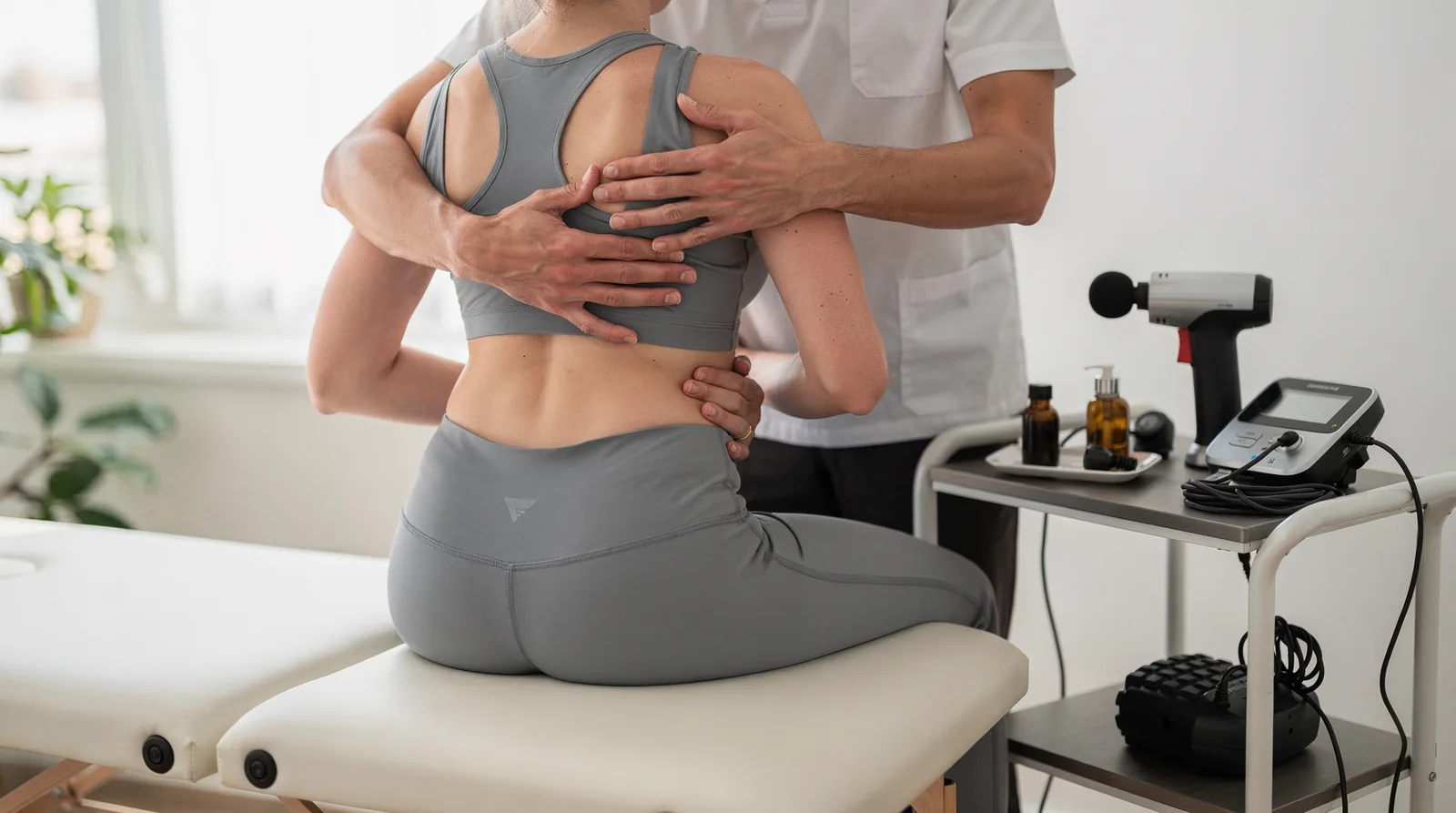
Dry needling targets muscle pain directly by releasing tight bands of tissue. Acupuncture focuses on restoring energy flow through superficial points. Clients with stubborn knots, cramping, or restricted movement often find dry needling more effective for mechanical muscle problems.
Dry needling is a form of therapy designed to relieve muscle pain, tension, and cramping while improving flexibility and restoration of function. Physical therapists typically use this technique as part of a larger treatment plan for chronic and acute pain, making it a natural complement to rehabilitation exercises. The needles reach deeper myofascial trigger points—those hypersensitive spots that refer pain elsewhere.
How Deep Do the Needles Go?
Acupuncture needles are typically inserted at a superficial depth, little more than skin deep. Dry needling penetrates deeper to reach the actual muscle knots causing the problem. That depth difference explains why dry needling produces a local twitch response when the tight band releases.
Which Approach Fits Your Condition?
- Choose dry needling for muscle tension, cramping, or sports injuries
- Choose acupuncture for systemic issues like stress, headaches, or energy imbalance
- Combine both when pain involves multiple layers of tissue
The right choice depends on the source of the pain. Muscle-specific restrictions respond best to dry needling’s targeted approach, especially when paired with physical therapy for lasting recovery.

How Do You Choose the Right Needle Therapy?
Choosing between needle therapies depends on the primary source of pain and the treatment goals. For individuals dealing with chronic pain, muscle tightness, or sports injuries, dry needling vs acupuncture presents two distinct paths. Dry needling targets specific muscular trigger points to release tension and improve mobility. Acupuncture, rooted in traditional Chinese medicine, focuses on restoring energy flow through the body’s meridians.
What makes dry needling different for active rehabilitation?
Dry needling, also known as myofascial point dry needling, is a completely natural treatment designed specifically for chronic and acute pain. This therapy fits naturally within a broader rehabilitation plan rather than standing alone. At LIVE FULLY NOW Rehab & Wellness, dry needling integrates with other hands-on therapies like myofascial release and craniosacral therapy. This combination creates a comprehensive approach that supports lasting recovery and improved mobility.
How does a holistic approach benefit recovery?
The right choice extends beyond which needle technique works best. A center that offers personalized rehabilitation programs builds stronger long-term results. These programs promote strength, mobility, balance, and flexibility together. The benefit shows in two clear outcomes: preventing future injuries and supporting a confident return to daily activities. Clients receive treatment plans tailored to their specific movement patterns and pain triggers after a thorough evaluation.
