
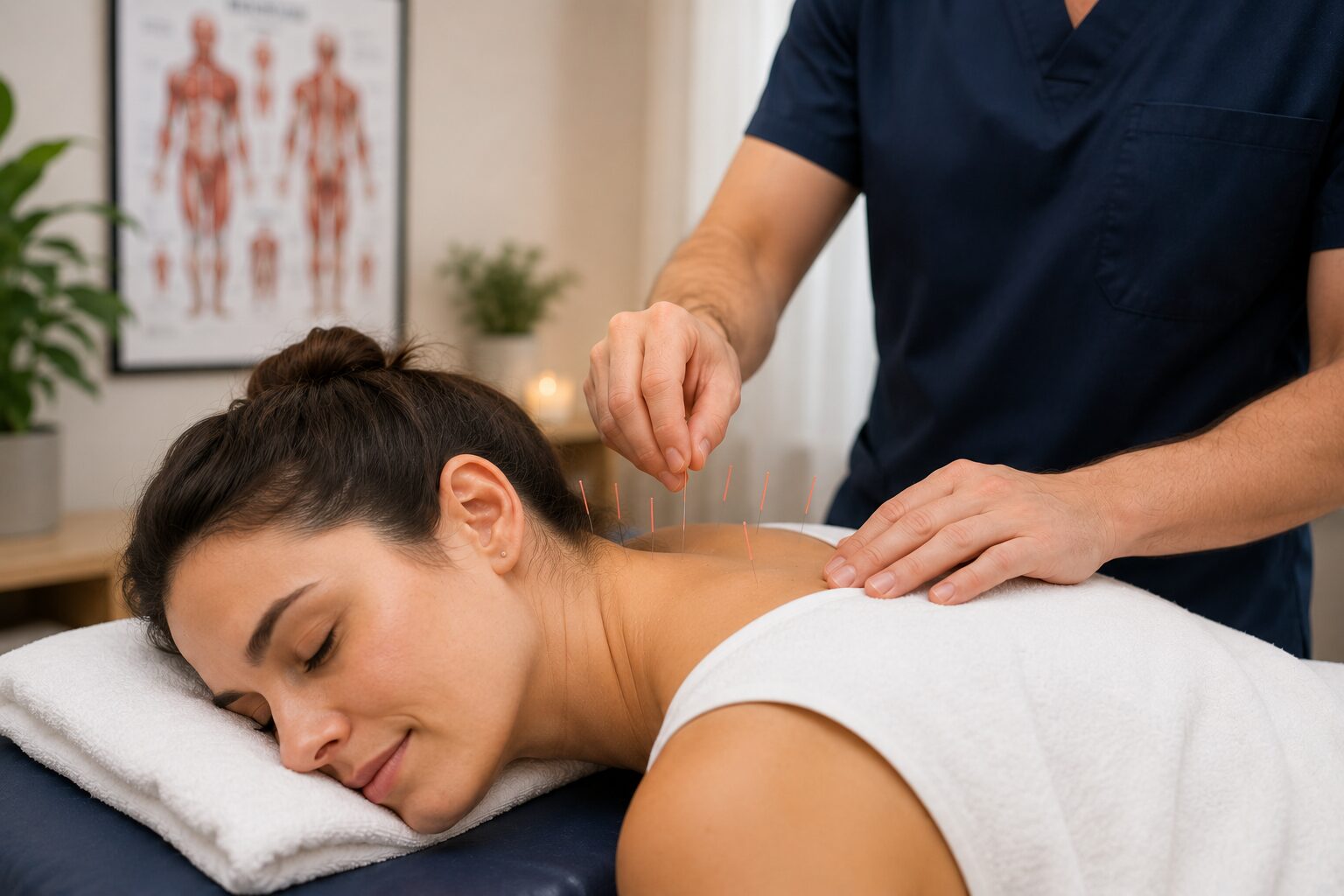
 You wake up and instinctively turn your head toward the alarm clock but a sharp pull stops you halfway. Later, backing your car out of the driveway becomes surprisingly difficult because checking your blind spot hurts. Sitting at your desk for a few hours makes your shoulders feel tight, and by evening, the discomfort has crept into your upper back or triggered another headache.
If this sounds familiar, you’re not alone.
Neck pain affects millions of adults every year. For some people, it appears after sleeping in an awkward position or lifting something heavy. For others, it develops gradually from long hours spent working on a computer, driving, or looking down at a smartphone. Sometimes the pain resolves within a few days. In many cases, however, it lingers for weeks or months and begins interfering with work, sleep, exercise, and everyday activities.
When stretching, heat, massage, or over-the-counter pain relievers provide only temporary relief, many people begin looking for other conservative treatment options. Acupuncture is one approach that has gained increasing attention because research suggests it may help reduce pain, decrease muscle tension, and improve function for many individuals living with neck pain.
Acupuncture is not a miracle cure, nor does it replace a comprehensive rehabilitation plan when one is needed. Instead, it can become an effective part of a personalized treatment strategy that may also include physical therapy, therapeutic exercise, posture correction, manual therapy, lifestyle changes, and education about pain.
Whether you live in Hackettstown, NJ, Northwest New Jersey, or nearby communities such as Long Valley, Chester, Washington, Mansfield, Independence Township, or Mount Olive, understanding how acupuncture fits into neck pain treatment can help you make informed decisions about your care.
What Causes Neck Pain?
The neck, also called the cervical spine, is one of the most mobile regions of the body. It supports the weight of the head which averages about 10 to 12 pounds while allowing you to look up, down, side to side, and over your shoulder thousands of times every day.
This remarkable mobility comes with a trade-off. The neck depends on a complex interaction between muscles, joints, ligaments, discs, nerves, and connective tissues. When one part isn’t functioning well, other structures often compensate, leading to pain or stiffness.
Common Causes of Neck Pain
| Cause | What Happens | Common Symptoms |
|---|---|---|
| Muscle strain | Overworked muscles become tight and irritated | Aching, stiffness, soreness |
| Poor posture | Prolonged forward head position increases stress on muscles and joints | Neck tightness, headaches |
| Joint irritation | Small spinal joints become inflamed | Pain with turning the head |
| Degenerative changes | Age-related wear affects discs and joints | Chronic stiffness, reduced mobility |
| Whiplash | Sudden acceleration-deceleration injury | Pain, limited motion, muscle guarding |
| Pinched nerve | Nerve root becomes compressed or irritated | Pain, numbness, tingling into the arm |
| Stress-related muscle tension | Emotional stress increases muscle contraction | Tight shoulders, tension headaches |
The Role of Modern Lifestyle
One of the biggest contributors to persistent neck pain today isn’t a single injury, it’s repetition.
Many people spend eight or more hours each day with their head positioned slightly forward while using computers, tablets, or phones. Even a small forward shift significantly increases the workload placed on the muscles supporting the head.
Imagine holding a bowling ball close to your chest. It feels manageable. Now extend your arms forward. The ball weighs the same, but your muscles work much harder. A similar principle applies when your head moves forward from its neutral position.
Over time, muscles become fatigued, connective tissues tighten, joints become irritated, and pain develops.
Pain Isn’t Always About Damage
One of the most important things patients learn during rehabilitation is that pain doesn’t always equal injury.
Acute pain often reflects tissue irritation following a recent strain or injury. Chronic pain is more complex.
When pain persists beyond normal healing time, the nervous system itself can become more sensitive. This process, sometimes called central sensitization, means the brain and spinal cord amplify pain signals even after tissues have largely recovered.
That’s one reason chronic neck pain often fluctuates.
Some days feel relatively normal.
Other days even light activity feels uncomfortable.
Understanding this distinction helps explain why treatment often focuses on calming the nervous system not simply treating muscles alone.
Different Types of Neck Pain
Not every neck problem feels the same.
Muscle Pain
Often described as:
- Tightness
- Aching
- Fatigue
- Muscle knots
- Tender spots
Joint Pain
Usually worse when:
- Turning the head
- Looking upward
- Driving
- Sleeping in certain positions
Nerve Pain
Often includes:
- Burning sensations
- Tingling
- Numbness
- Electric shock-like pain
- Symptoms traveling into the shoulder, arm, or hand
Referred Pain
Sometimes the source of pain isn’t where you feel it.
For example, irritated muscles near the shoulder blade can create discomfort in the neck. Likewise, neck joints may contribute to headaches or upper shoulder pain.
Proper evaluation helps determine which tissues may be contributing to your symptoms.
When Neck Pain Needs Immediate Medical Attention
Most neck pain responds well to conservative care, but certain symptoms require prompt medical evaluation.
Seek immediate medical attention if neck pain occurs with:
- Significant trauma such as a motor vehicle accident
- Loss of bowel or bladder control
- Severe arm weakness
- Difficulty walking
- High fever with neck stiffness
- Sudden unexplained weight loss
- Difficulty speaking or swallowing
- Loss of coordination
- Symptoms of stroke
- Progressive numbness affecting both arms or legs
Acupuncture should never delay emergency medical care when these warning signs are present.
How Acupuncture Targets Neck Pain
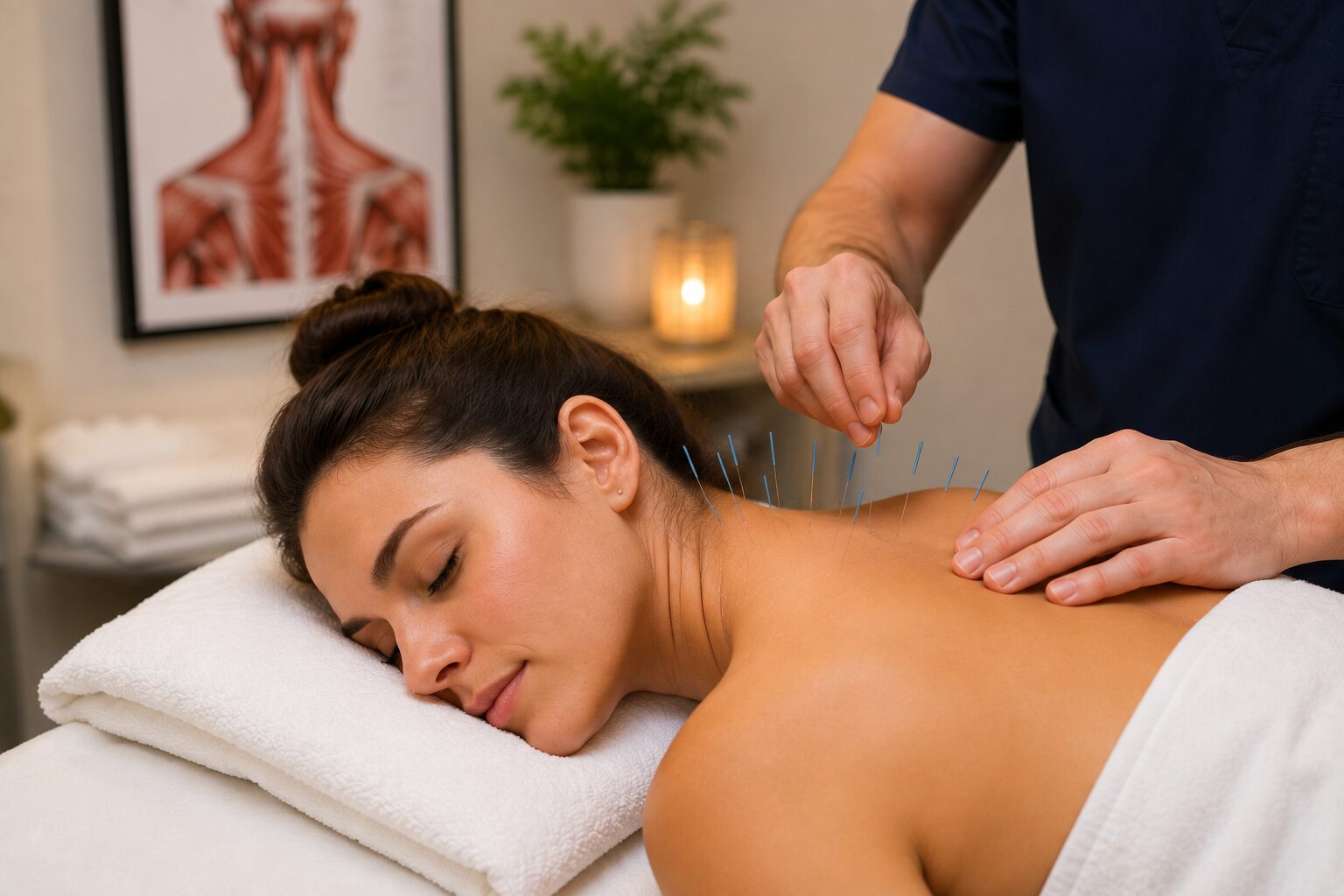
Acupuncture has been practiced for thousands of years, but modern research has helped explain several physiological mechanisms that may contribute to pain relief.
Rather than thinking of acupuncture as “fixing” one specific tissue, it may be more accurate to view it as influencing several body systems that work together during recovery.
How the Nervous System Responds
Very thin sterile needles stimulate sensory receptors within muscles, fascia, connective tissue, and skin.
This stimulation sends signals through the nervous system that may:
- Reduce pain sensitivity
- Encourage release of natural pain-relieving chemicals
- Improve communication between the brain and body
- Help regulate the body’s stress response
Research suggests acupuncture may encourage the release of endorphins, serotonin, and other neurotransmitters involved in pain modulation.
These natural chemicals don’t eliminate every source of pain, but they may reduce how intensely pain is experienced.
Addressing Muscle Tension
Many patients describe feeling as though their neck muscles are “constantly tight.”
Persistent muscle guarding often develops after injury, poor posture, or prolonged stress.
Acupuncture may help reduce excessive muscle activity, allowing muscles to relax and move more efficiently.
Patients frequently report that their neck feels:
- Less stiff
- Easier to turn
- More relaxed
- Less fatigued during daily activities
Improving Blood Flow
Healthy tissues depend on adequate circulation.
Some studies suggest acupuncture may temporarily increase local blood flow around treated tissues.
Improved circulation may support:
- Delivery of oxygen
- Removal of metabolic waste
- Healing processes
- Reduction of muscle tightness
Although increased circulation alone does not cure chronic pain, it can contribute to a healthier tissue environment.
Influencing Fascia
Fascia is the connective tissue network surrounding muscles, nerves, blood vessels, and organs.
When fascia loses normal mobility due to injury, inactivity, or repetitive strain, movement can become restricted.
Needle stimulation may influence fascial tension, helping improve movement between tissue layers.
This may partially explain why some patients notice improvements in flexibility following treatment.
Calming an Overprotective Nervous System
Think of the nervous system like a home security alarm.
After an injury, the alarm becomes appropriately sensitive.
Sometimes, however, the alarm stays on high alert long after the original threat has resolved.
Acupuncture may help reduce this heightened sensitivity, making everyday movement feel less threatening to the nervous system.
This doesn’t mean pain is “all in your head.”
It means the brain and nervous system play an important role in how pain is processed.
Trigger Points and Acupuncture
Trigger points are highly sensitive areas within muscle tissue that may produce local pain or pain referred elsewhere.
For example:
- A trigger point in the upper trapezius may contribute to headaches.
- A trigger point near the shoulder blade may produce neck pain.
- Tight neck muscles may create discomfort extending toward the jaw.
Needling techniques may help reduce trigger point sensitivity, allowing muscles to relax more effectively.
What Happens During Treatment?
A first visit typically begins with a thorough evaluation.
This includes discussing:
- When symptoms started
- Daily activities
- Previous injuries
- Pain location
- Movement limitations
- Medical history
- Goals for treatment
Needles are then placed in carefully selected locations based on the individual’s presentation.
Many patients are surprised by how thin acupuncture needles actually are.
Most describe sensations such as:
- Mild pressure
- Warmth
- Tingling
- Dull ache
- Muscle twitch
Sharp pain is uncommon.
Treatment generally lasts between 20 and 40 minutes, although appointments vary.
Acupuncture as Part of Rehabilitation
One common misconception is that acupuncture replaces rehabilitation exercises.
In reality, combining treatments often produces better long-term outcomes than relying on a single approach.
A personalized rehabilitation program may include:
| Treatment | Primary Goal |
| Acupuncture | Pain modulation and muscle relaxation |
| Physical therapy | Restore strength and movement |
| Manual therapy | Improve joint and soft tissue mobility |
| Therapeutic exercise | Build resilience and function |
| Postural education | Reduce repeated strain |
| Ergonomic modifications | Improve workplace comfort |
| Home exercise program | Maintain long-term progress |
For many patients, acupuncture creates a “window of opportunity.”
Reduced pain allows movement to feel easier, making exercise and rehabilitation more effective.
